
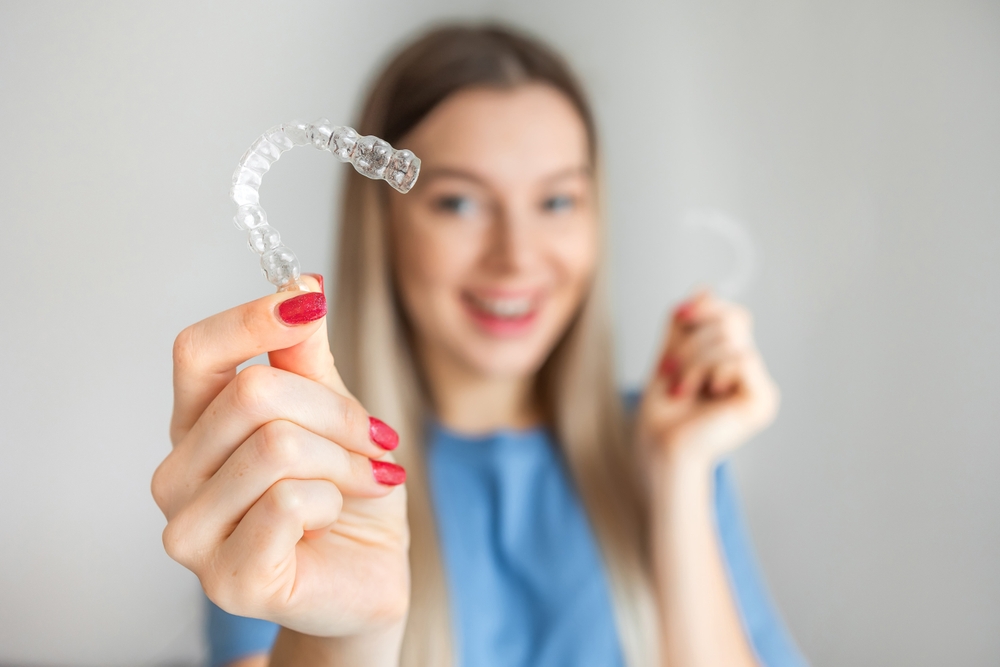
About Clear Aligners
Want straighter teeth without the look of traditional braces? Clear aligners offer a discreet, removable way to correct certain alignment concerns. At Polaris Dentistry (Google Maps, opens in a new tab) in Sachse, TX, Dr. Shilpa Dhawan can evaluate your teeth and bite to determine whether clear aligners are right for you.
Clear aligners can fit into your daily routine, but successful treatment requires consistency. You’ll need to wear your trays as directed, keep them clean, and attend regular checkups. Our team will explain what to expect, including the benefits and limitations of treatment. We want to help you achieve a healthier, straighter smile with a plan that supports your long-term dental health.
How Do Clear Aligners Work?
Clear aligners straighten teeth using a series of custom-made, removable trays. Each set applies gentle, controlled pressure to gradually guide your teeth toward their planned positions. You’ll switch to a new set according to your dentist’s instructions as treatment progresses.
Before starting treatment, Dr. Dhawan examines your teeth and bite. She may recommend photographs, X-rays, and digital scans or impressions to develop your treatment plan. These records help determine which tooth movements are needed and whether clear aligners can achieve your goals.
At Polaris Dentistry, we offer SureSmile clear aligners as an option for eligible patients. Some treatment plans also require small, tooth-colored attachments bonded to certain teeth. These attachments help the trays apply pressure more effectively during specific movements. Not everyone needs them, and we’ll explain their purpose if they’re part of your plan.
Who Is a Good Candidate for Clear Aligners?
Clear aligners can correct several common alignment concerns. Their subtle appearance makes them appealing to adults who want to straighten their teeth without noticeable brackets and wires. They may also work well for teens who can consistently follow their wear instructions.
Clear aligner treatment may help with:
- Crowded teeth: Teeth that overlap or are difficult to clean thoroughly.
- Gaps between teeth: Spaces that affect the appearance or alignment of your smile.
- Certain bite problems: Alignment concerns involving how your upper and lower teeth fit together.
However, clear aligners aren’t the right solution for every patient. More complex orthodontic problems may require traditional braces or care from an orthodontic specialist.
Healthy teeth and gums are also important before beginning treatment. Routine cleanings and exams help monitor your oral health. If you have active cavities or gum disease, those conditions may need attention first. Dr. Dhawan will evaluate your oral health and explain which treatment options make sense for your situation.
Are Clear Aligners Better Than Traditional Braces?
Clear aligners and traditional braces can both straighten teeth, but they work differently. The best choice depends on your alignment needs, lifestyle, and ability to follow treatment instructions.
Clear aligners are nearly invisible when worn and can be removed for meals, brushing, and flossing. This makes them a convenient choice for many patients who prefer a less noticeable orthodontic option.
Traditional braces remain attached to your teeth throughout treatment. They may be more appropriate for certain complex tooth movements or patients who would struggle to wear removable trays consistently.
During your consultation, we’ll discuss the differences and help you understand which approach may offer the most predictable results for your smile.
How Many Hours a Day Should You Wear Clear Aligners?
Most clear aligner treatment plans require wearing your trays for approximately 20–22 hours each day. Your dentist will provide specific instructions based on your treatment needs.
Because aligners work only while you’re wearing them, consistency plays an important role in your progress. You’ll need to remove your trays before eating and when drinking anything other than plain water.
If you frequently snack or sip coffee throughout the day, you may need to adjust your routine. Keeping your aligners in their case during meals and putting them back in after cleaning your teeth can help you maintain good habits.
You may notice mild pressure or tenderness when switching to a new set of trays. Some patients also experience temporary changes in speech as they adjust. These effects often improve with time.
However, persistent pain or a tray that no longer fits properly should be evaluated. Contact our office for guidance rather than switching to another set without your dentist’s approval.
How Do You Clean Clear Aligners?
Keeping your clear aligners clean helps protect your teeth and gums throughout treatment. Because the trays fit closely over your teeth, trapped food particles and sugary liquids can increase the risk of dental problems.
Fortunately, removable aligners make it easier to maintain your usual brushing and flossing routine.
Follow these simple habits:
- Brush and floss regularly. Whenever possible, clean your teeth before putting your aligners back in.
- Clean your trays daily. Follow your dentist’s instructions and avoid hot water, which can damage the material.
- Use your aligner case. Store your trays safely whenever they’re not in your mouth.
- Keep up with dental visits. Regular exams help your dentist monitor your teeth and gums during treatment.
Let our team know if you experience bleeding gums, ongoing soreness, or difficulty cleaning around attachments. Addressing these concerns early can help you maintain a healthier smile throughout treatment.
How Long Does Clear Aligner Treatment Take?
The length of clear aligner treatment varies depending on your starting alignment, the complexity of the movements needed, and how consistently you wear your trays.
Some patients require relatively minor adjustments, while others need more extensive tooth movement. Dr. Dhawan can provide an estimated treatment timeline after examining your teeth and reviewing your goals.
During follow-up visits, we’ll check how your trays fit and whether your teeth are moving according to plan. Some patients need additional sets of aligners to refine their results.
Your estimated timeline is a guide rather than a guaranteed completion date. Following your wear instructions and attending scheduled appointments can help keep treatment progressing as planned.
Will You Need Retainers After Clear Aligners?
Yes. Retainers are an important part of maintaining your results after clear aligner treatment.
Teeth can gradually shift over time, even after successful orthodontic treatment. Wearing retainers as directed helps maintain their new positions and protects the progress you’ve made.
Your dentist will explain when to wear your retainers, how to care for them, and when they may need to be replaced. Following these instructions is essential for keeping your smile aligned over the long term.
Schedule a Clear Aligner Consultation in Sachse, TX
A straighter smile can improve more than your appearance. Proper tooth alignment may also make certain areas easier to clean and support a healthier bite.
At Polaris Dentistry, Dr. Shilpa Dhawan helps patients explore their options for improving tooth alignment. Whether you’re concerned about crowded teeth, unwanted spaces, or the appearance of traditional braces, we’ll take time to evaluate your smile and explain your treatment choices.
Ready to explore a straighter smile? Call Polaris Dentistry in Sachse, TX, today to schedule your clear aligner consultation. You can also explore our cosmetic dentistry options. Discover whether SureSmile clear aligners are the right fit for your teeth, lifestyle, and smile goals.